

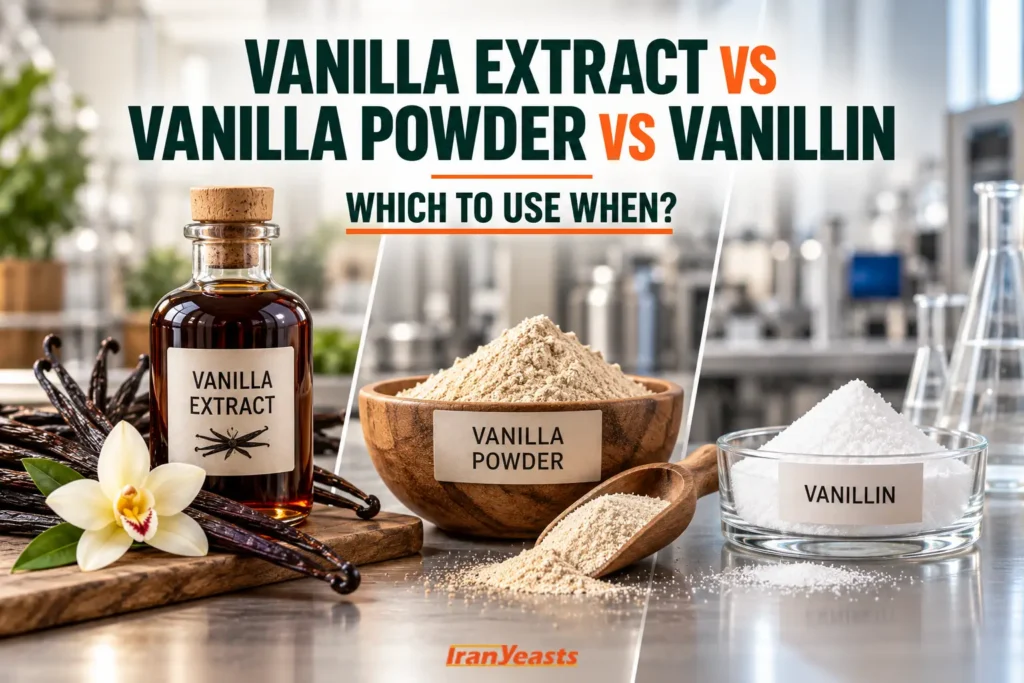
Vanilla extract, vanilla powder, and vanillin all show up in recipes and formulas labeled simply as vanilla, but they behave nothing alike once they hit heat, liquid, or a dry mix. Using the wrong one is rarely a disaster, but it usually means either wasted flavor or a texture problem nobody can quite explain.
Each form trades off differently on strength, moisture content, alcohol, and cost, and food manufacturers working at volume feel those tradeoffs more than a home baker ever would. A dosage that works fine in a small batch can throw off an entire production run if the form was not chosen with the process in mind.
This guide breaks down what each form actually is, where it performs best, and how to convert between them when a formula calls for one you do not have on hand.
Looking to Import Iranian Instant Dry Yeast at Wholesale Scale?
Get expert guidance on product selection, packaging, export documentation, pricing, and international shipping directly from our export team.
Vanilla Extract, Vanilla Powder, and Iranian Vanillin: The Three Forms Compared
All three forms deliver vanilla flavor, but they are built from different starting points and behave differently once they enter a formula. The table below gives a quick comparison before the sections that follow go into each one in more depth.
| Form | Base | Alcohol | Best Suited For |
|---|---|---|---|
| Vanilla extract | Beans steeped in alcohol and water | At least 35% by volume (US standard) | Unbaked or gently cooked applications, liquid formulas |
| Vanilla powder | Dried bean, spray-dried extract, or vanillin with a carrier | None | Dry mixes, light-colored products, alcohol-free formulas |
| Vanillin | Isolated flavor compound, natural or synthetic | None | Precise dosing, industrial production, high-heat processing |
Vanilla Extract: Best Uses and Limitations
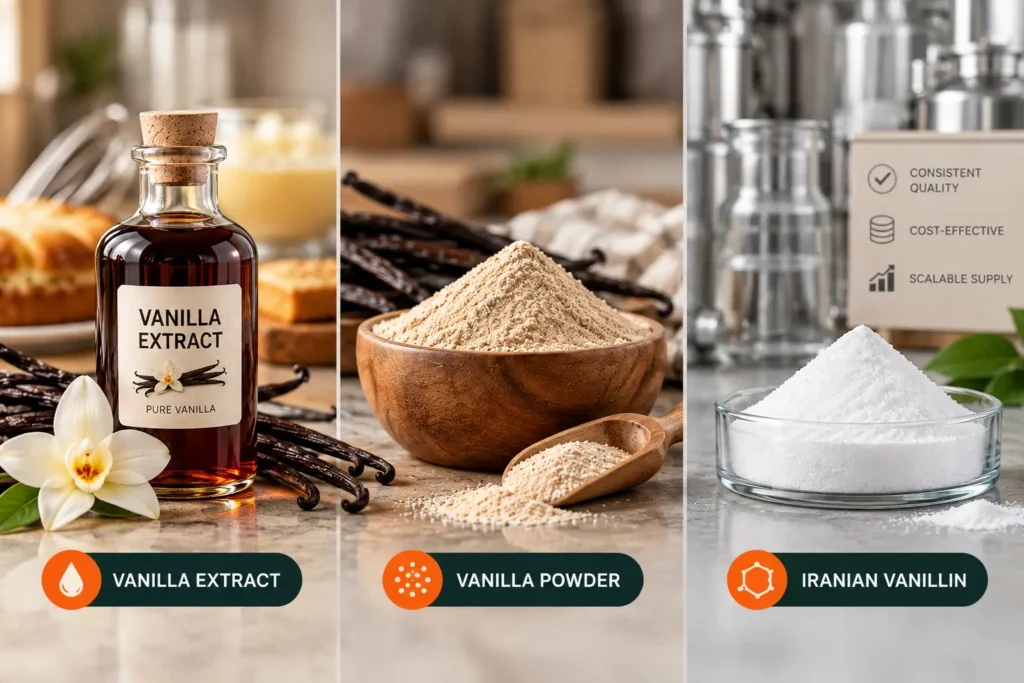
In the US, vanilla extract is a defined legal category, not just a descriptive name. Under 21 CFR 169.175, vanilla extract must contain at least 35 percent ethyl alcohol by volume and a minimum concentration of vanilla constituent extracted from beans. Concentrated versions, labeled as 2-fold, 4-fold, and so on, contain multiple units of that vanilla constituent per gallon, and TTB’s own standard of identity guidance confirms that versions with less than 35 percent alcohol must be labeled as vanilla flavoring rather than extract.
Applications and Best Uses
Vanilla extract performs best in unbaked or gently heated applications such as ice cream, pastry cream, panna cotta, whipped cream, and frostings, where its full range of aroma compounds survives intact. It also integrates smoothly into liquid formulas without adding dry ingredients that could affect texture.
Key Benefits
Flavor complexity: Real vanilla extract carries hundreds of aroma compounds beyond vanillin itself, giving a more layered, less one-dimensional flavor than an isolated compound.
Easy liquid integration: Mixes directly into batters, creams, and liquid bases without altering moisture content in a way dry forms can.
Long shelf life: Properly stored and sealed, vanilla extract holds its flavor for years due to its alcohol content.
Limitations
A meaningful share of vanilla extract’s aromatic complexity burns off during baking, which is why blind taste tests have sometimes found bakers preferring the simpler, vanillin-heavy punch of imitation extract in baked goods specifically. Extract also adds both liquid and alcohol to a formula, which is not always compatible with alcohol-free labeling requirements or dry-mix production.
Vanilla Powder: Best Uses and Limitations
Vanilla powder is not one single product. It can mean pure ground vanilla bean, spray-dried vanilla extract with the alcohol removed, or synthetic vanillin blended onto a starch or sugar carrier. Checking which type a supplier is actually offering matters, since the three behave differently in a formula and carry very different price points.
Applications and Best Uses
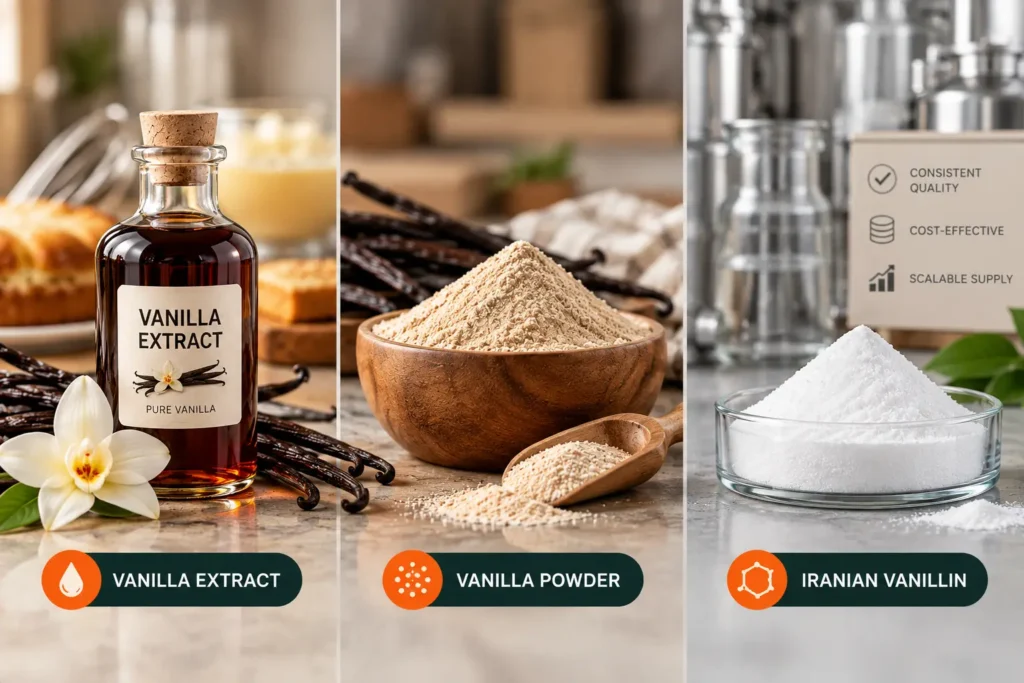
Vanilla powder is the standard choice for dry mixes, including cake mixes, protein powders, and spice blends, where adding a liquid extract would disrupt the formula’s moisture balance. It is also preferred for light-colored products such as white icing, meringue, and pale baked goods, since it will not introduce the amber tint that liquid extract can.
Key Benefits
Alcohol-free: Suitable for formulas that need to avoid alcohol for labeling, religious, or dietary reasons.
No added moisture: Keeps a dry mix dry, which liquid extract cannot do.
Concentrated flavor: Because it is not diluted by a liquid base, a small amount of vanilla powder delivers more flavor per gram than an equivalent amount of extract.
Limitations
Vanilla powder can clump if exposed to humidity during storage, and because the category covers three genuinely different products, a buyer comparing quotes across suppliers needs to confirm exactly what is in the blend rather than assuming all vanilla powder is equivalent. Buyers weighing formats against each other can browse wholesale vanilla options to see how pricing compares across packaging types.
Vanillin: Best Uses and Limitations
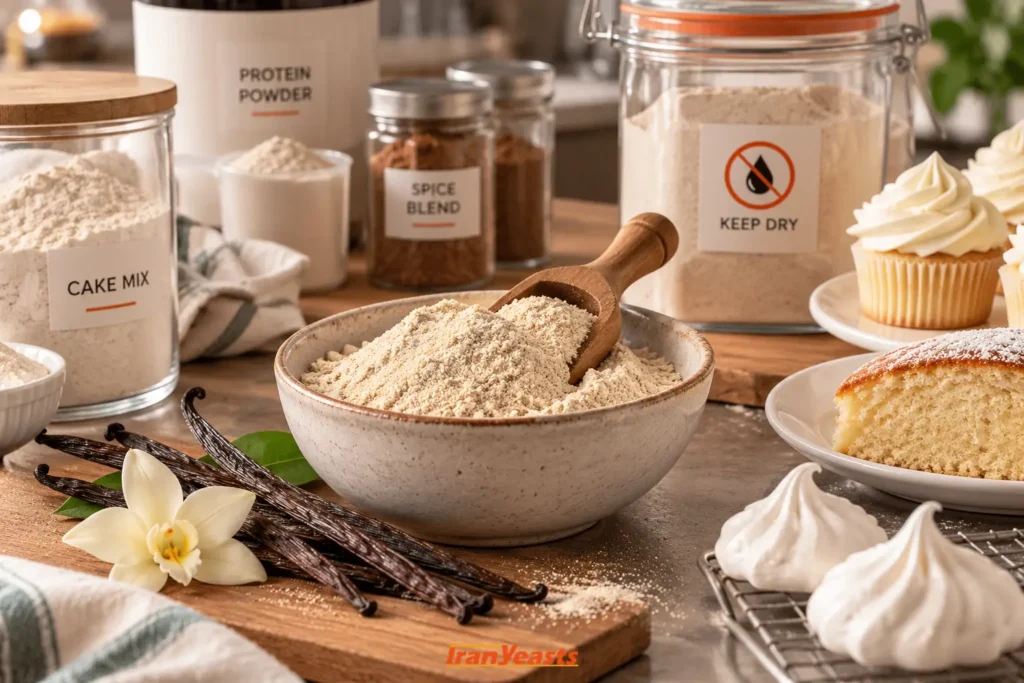
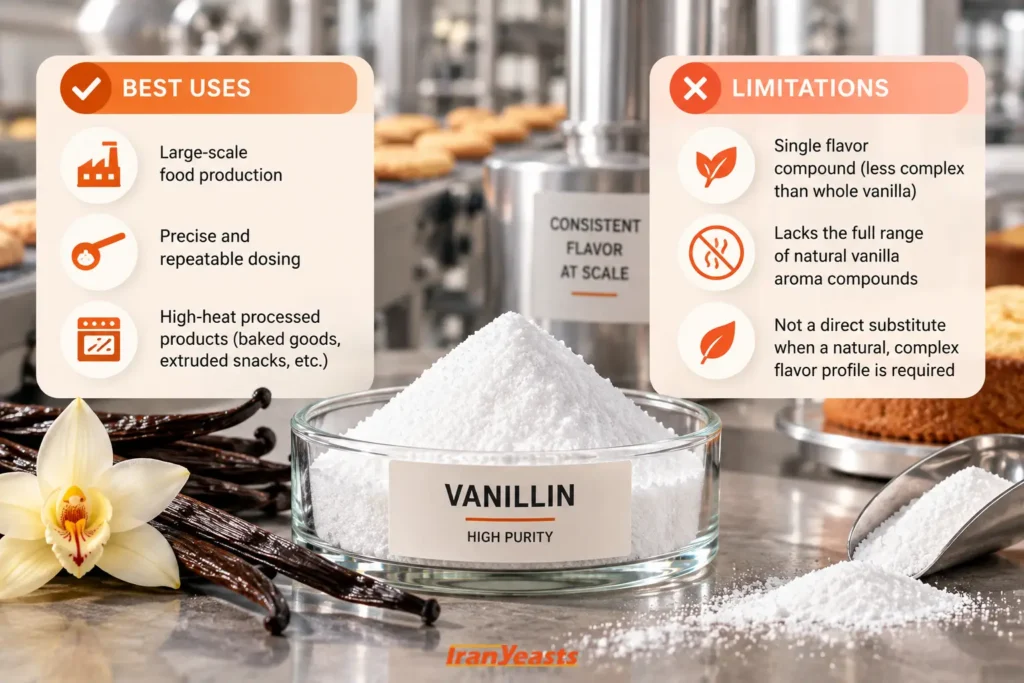
Vanillin is the single dominant flavor compound in vanilla, available as a standalone crystalline powder from either natural or synthetic sources. The distinction between those sources, and what it means for labeling, is covered in detail in natural versus artificial vanilla flavoring, which applies directly to vanillin regardless of which form a manufacturer ultimately chooses.
Applications and Best Uses
Vanillin is the default choice for large-scale industrial food production, where precise, repeatable dosing matters more than the layered complexity of whole-bean extract. It holds up well under high-heat processing, making it a reliable option for baked goods, extruded snacks, and other applications where extract’s more delicate aroma compounds would not survive intact anyway.
Key Benefits
Precise dosing: As an isolated compound rather than a diluted extract, vanillin allows manufacturers to calculate exact flavor strength per batch without guessing at an extract’s variable potency.
Heat stability: Performs reliably in baked and high-temperature processed products where extract’s more delicate aromatics would largely burn off regardless.
Cost efficiency at scale: Synthetic vanillin in particular is priced well below either natural extract or natural vanillin, which matters significantly at industrial production volume.
Limitations
Vanillin alone lacks the aromatic complexity of whole vanilla extract, delivering a more one-note vanilla flavor rather than the layered profile extract provides. For products marketed on flavor complexity or a premium positioning, this is worth weighing against the cost and consistency advantages.
Converting Between the Three Forms
Commonly cited substitution guidance suggests roughly a 1:1 ratio between vanilla powder and vanilla extract by volume, though some sources recommend using slightly less powder given its more concentrated flavor, so testing a small batch before scaling a substitution is worth the extra step. Pricing varies enormously between the three forms as well, a topic covered in more depth in the vanilla price comparison between Iran and other origins, which breaks down cost differences across natural extract, natural vanillin, and synthetic vanillin.
There is no universal conversion ratio between vanillin and either extract or powder, since concentration varies by product and supplier. Always start from a supplier’s specification sheet rather than a general online ratio when converting a formula that needs to hold up at production scale.
Which Form Should Food Manufacturers Choose?
For most industrial food manufacturing, vanillin offers the best combination of cost, dosing precision, and heat stability, particularly for products where a premium natural-extract flavor profile is not the primary selling point. Buyers ready to source at volume can review how to buy Iranian vanilla in bulk for a full walkthrough of packaging formats and vetting steps, or go directly to the Iranian vanilla product line to compare options.
Conclusion
Vanilla extract, vanilla powder, and vanillin are not interchangeable despite all being sold under the vanilla name. Extract carries the most aromatic complexity but loses much of it to heat, powder solves the alcohol and moisture problem for dry formulas, and vanillin offers the dosing precision and heat stability that industrial production depends on.
Choosing the right form comes down to matching the format to the process, not defaulting to whichever one a recipe happened to specify first. For most large-scale food manufacturing, that points toward vanillin, with extract and powder reserved for applications where their specific strengths actually matter.
References
- Electronic Code of Federal Regulations. (n.d.). 21 CFR 169.175: Vanilla extract.
- Alcohol and Tobacco Tax and Trade Bureau. (2024, April 1). Vanilla extracts and vanilla flavors.
- America's Test Kitchen. (n.d.). Can you really taste the difference between pure and imitation vanilla extract?
- America's Test Kitchen. (n.d.). Vanilla extract vs. imitation vanilla.
- Aayuluxe. (2025, November 12). Vanilla powder vs vanilla extract: What's the difference and which should you use?
Frequently Asked Questions
Find answers to common questions about Iranian instant dry yeast, including certifications, bulk orders, private labeling, export logistics, and delivery worldwide
What is the main difference between vanilla extract and vanilla powder?
Vanilla extract is a liquid made by steeping beans in alcohol and water, while vanilla powder is a dry form, either ground bean, spray-dried extract, or vanillin on a carrier, with no alcohol content.
Is vanilla powder stronger than vanilla extract?
Generally yes. Because powder is not diluted by a liquid base, a smaller amount typically delivers more concentrated flavor than the same volume of extract.
Why does imitation vanilla sometimes taste stronger in baked goods than real extract?
Imitation extract is vanillin-heavy and holds up better under heat, while real extract’s more delicate aroma compounds largely burn off during baking, leaving less perceptible flavor difference than in unbaked applications.
Can vanillin be used as a direct substitute for vanilla extract?
Not on a simple 1:1 basis. Vanillin is a concentrated isolated compound with no standard conversion ratio to extract, so a supplier’s specification sheet should guide dosing rather than a general rule of thumb.
Is vanilla powder always alcohol-free?
Yes, by definition vanilla powder does not contain alcohol, which is one of its main practical advantages over extract for formulas that need to avoid it.
What legally qualifies as vanilla extract in the US?
Under 21 CFR 169.175, vanilla extract must contain at least 35 percent ethyl alcohol by volume and a minimum concentration of vanilla constituent extracted from beans. Products below that alcohol threshold must be labeled vanilla flavoring instead.
Why do industrial food manufacturers often prefer vanillin over extract?
Vanillin allows precise, repeatable dosing and performs reliably under high-heat processing, both of which matter more at production scale than the layered aromatic complexity extract offers.