

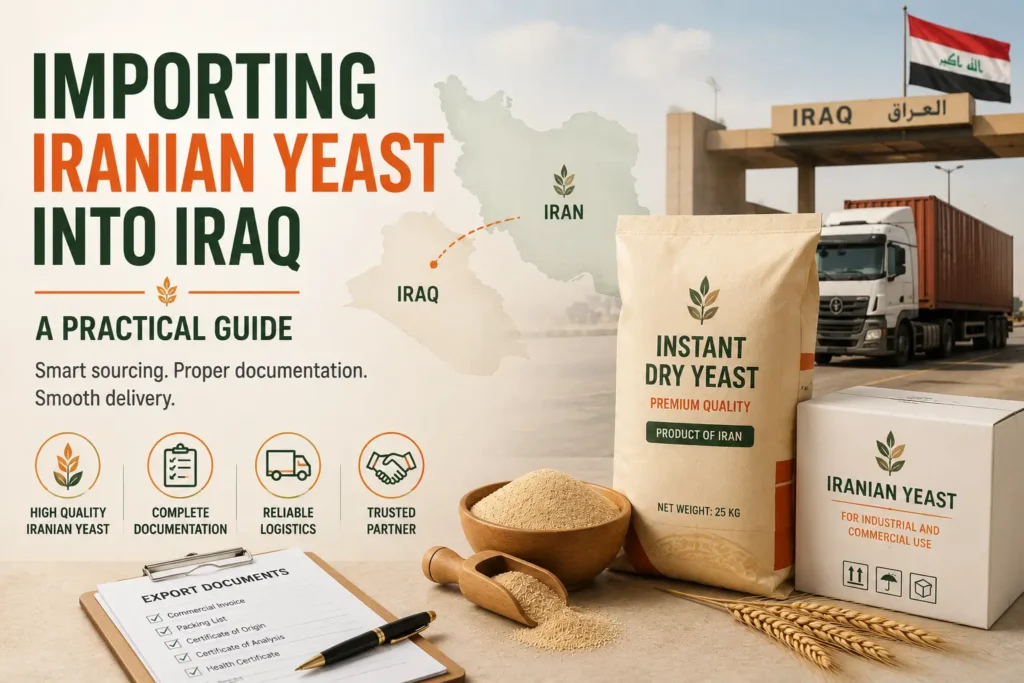
Iraq is one of the most established markets for Iranian food exports, with land routes, cultural ties, and decades of trade history all working in a supplier’s favor. Yeast follows the same pattern as other Iranian staples entering the country: strong demand, but real regulatory steps to clear first.
Unlike the more informal overland trade with some neighboring markets, Iraq requires a formal Certificate of Conformity for regulated food products before customs will release a shipment, which changes how distributors need to plan a first order.
This guide of Irany Yeast Company walks through what importers and distributors need to know about bringing yeast into Iraq, from certification through to final delivery.
Looking to Import Iranian Instant Dry Yeast at Wholesale Scale?
Get expert guidance on product selection, packaging, export documentation, pricing, and international shipping directly from our export team.
Why Iranian Yeast Has a Strong Foothold in Iraq
Iraq’s bread-based diet, from samoon to flatbreads served with nearly every meal, keeps demand for baker’s yeast consistent across the country. Iranian suppliers benefit from short land and river transit times compared to yeast shipped from more distant origins, along with an established network of trading relationships built over years of cross-border commerce, a track record reflected in why Iranian instant dry yeast has become a top choice for bulk importers worldwide.
Certificate of Conformity: Iraq's Core Import Requirement
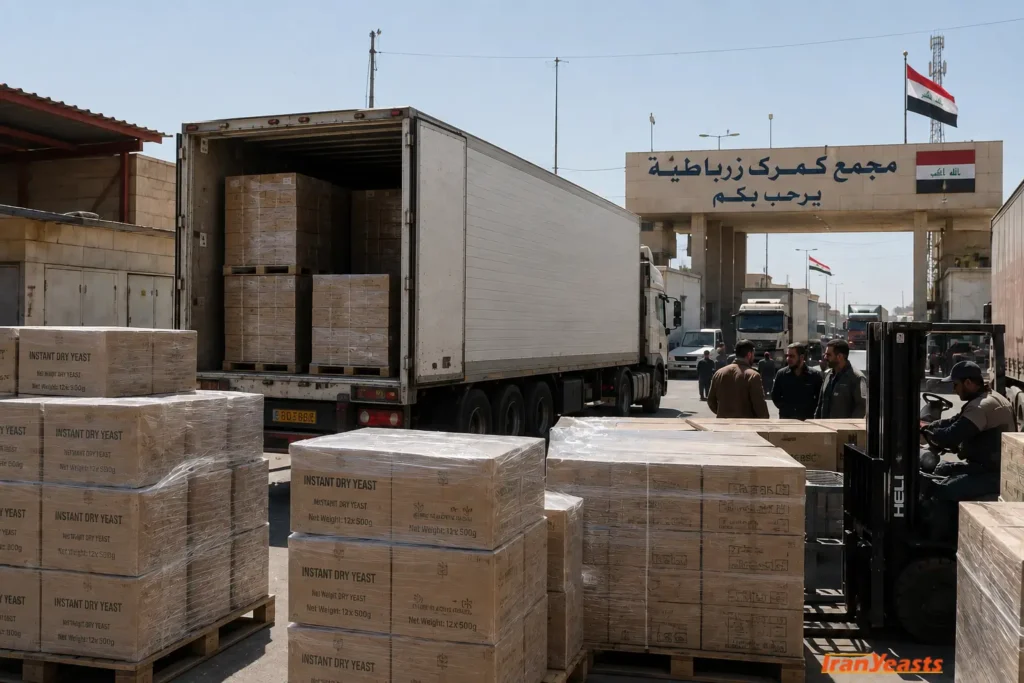
Every regulated food product entering Iraq, yeast included, requires a Certificate of Conformity issued under the Central Organization for Standardization and Quality Control’s inspection program before customs will release the shipment. This is arranged through a COSQC-authorized certification body that inspects and tests the product against applicable Iraqi standards prior to shipment, not after arrival.
Shipments that arrive without a valid Certificate of Conformity are rejected at Iraqi customs, so this step needs to happen well before goods leave the origin country. First-time importers should build several extra days into their timeline for this inspection and certification process, particularly for the first shipment from a new supplier.
Halal Certification and Additional Documentation
Halal certification carries real weight in the Iraqi market, both for regulatory purposes on certain product categories and for buyer confidence at the retail and bakery level. Suppliers who maintain current, verifiable certification make the documentation side of an import noticeably smoother, a topic covered in depth in halal-certified yeast export from Iran, which outlines what certificates and supporting paperwork to request before finalizing a supplier.
Beyond halal and the Certificate of Conformity, importers should confirm a commercial invoice, packing list, certificate of origin, and any lab test reports travel with the shipment, since Iraqi customs inspectors at the border will cross-check physical goods against this paperwork before release.
Border Routes for Iranian Yeast Entering Iraq
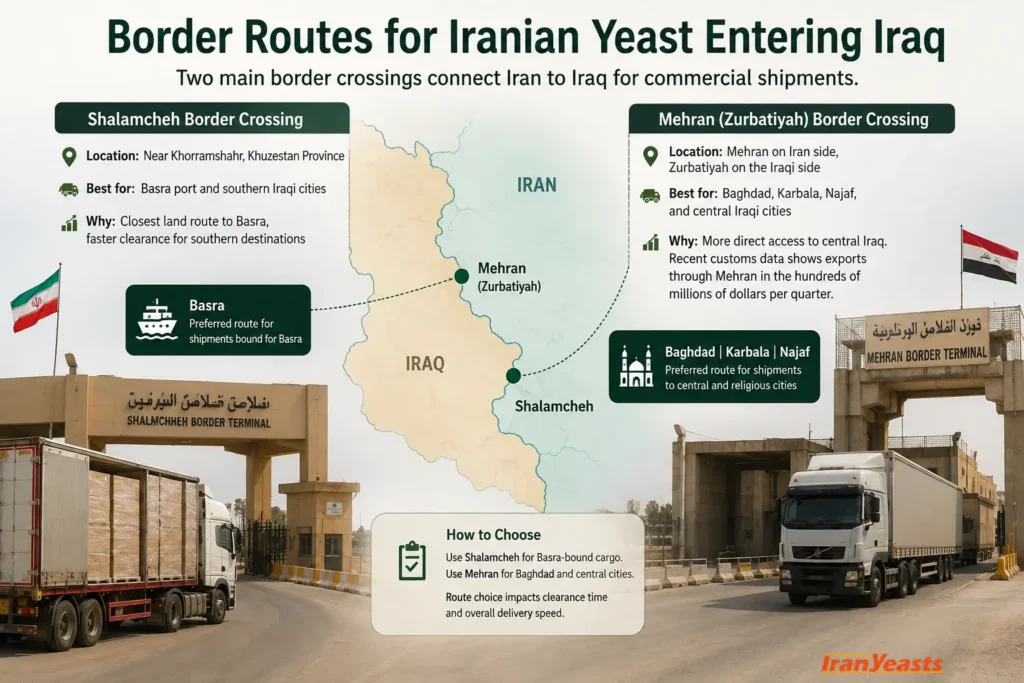
Two border crossings handle most of the commercial trade between Iran and Iraq. Shalamcheh, near Khorramshahr, is the closest land route to Basra port and southern Iraqi cities, making it the preferred crossing for cargo bound for Basra. Mehran, known as Zurbatiyah on the Iraqi side, offers more direct access to Baghdad, Karbala, and Najaf, and recent customs data shows exports through Mehran running in the hundreds of millions of dollars per quarter, reflecting its role as one of Iran’s busiest routes into Iraq.
Choosing the right crossing depends on the final destination inside Iraq as much as anything else. A shipment bound for Basra clears fastest through Shalamcheh, while cargo destined for Baghdad or the central religious cities typically moves faster through Mehran, particularly outside peak pilgrimage periods when the route sees heavier traffic.
Understanding Market Demand and Positioning
Iraq’s yeast demand sits within a broader regional picture that is worth understanding before setting pricing or volume expectations for a new distributor relationship. A wider view of the yeast market in the Middle East helps put Iraq’s specific demand patterns and price sensitivity in context relative to neighboring markets Iranian suppliers also serve.
Working With a Supplier Set Up for the Iraqi Market
The certification and documentation steps above only work smoothly if the supplier on the other end is already set up to support them. Understanding general bulk dry yeast pricing from Iran alongside a supplier’s track record on documentation and certification gives distributors a much clearer picture of total cost and risk than price alone, especially for a first order into a market with formal compliance requirements like Iraq.
Conclusion
Importing yeast into Iraq comes down to getting the paperwork right before goods ever leave Iran: a valid Certificate of Conformity, halal documentation where relevant, and a border route matched to the shipment’s final destination inside the country. First-time importers benefit from following a structured process, similar to the one outlined in how to import yeast from Iran, rather than treating each step as a separate, disconnected task.
Distributors who plan for these steps up front, rather than treating them as a formality to sort out later, avoid the costly delays that come from a rejected shipment sitting at the border while documentation gets resolved after the fact.
References
- Applus+. (n.d.). Certificate of Conformity - Iraq.
- Shafaq News. (2026, July 4). Iran exports $214.7M in goods to Iraq through Mehran.
- TUV Rheinland. (2025, March 1). Key regulatory update under Iraq's ICIGI program: New product list for COC certification.
- SharMarket. (2025, July 23). Land transport routes to Iraq from Iranian borders.
- Rudaw. (2026, February 24). Exports from Iran's Mehran border crossing to Iraq exceed $1.2 billion.
Frequently Asked Questions
Find answers to common questions about Iranian instant dry yeast, including certifications, bulk orders, private labeling, export logistics, and delivery worldwide
Is a Certificate of Conformity mandatory for yeast imports into Iraq?
Yes. Yeast falls under Iraq’s regulated food products, and shipments arriving without a valid Certificate of Conformity from a COSQC-authorized body are rejected at customs.
Which border crossing should I use to import yeast into Iraq?
Shalamcheh is the fastest route for cargo bound for Basra and southern Iraq, while Mehran offers more direct access to Baghdad, Karbala, and Najaf in central Iraq.
How long does Certificate of Conformity inspection take before shipping?
Timelines vary by certification body and product, but importers should plan for several extra days beyond production time, particularly for a first shipment from a new supplier.
Is halal certification legally required for yeast entering Iraq?
Requirements vary by product category, but documented halal certification is widely expected by buyers and can smooth both customs review and retail-level trust in the product.
What documents travel with a yeast shipment into Iraq?
A commercial invoice, packing list, certificate of origin, Certificate of Conformity, and any relevant lab test reports should all accompany the shipment for customs review.
Does the Mehran border crossing see seasonal traffic changes?
Yes. Mehran also serves as a major route for religious pilgrims traveling to Iraq’s holy cities, and commercial traffic can slow during peak pilgrimage periods.
Why is yeast demand so consistent in the Iraqi market?
Bread, including samoon and other flatbreads, is a daily staple across Iraq, which keeps demand for baker’s yeast steady rather than tied to a specific season.