

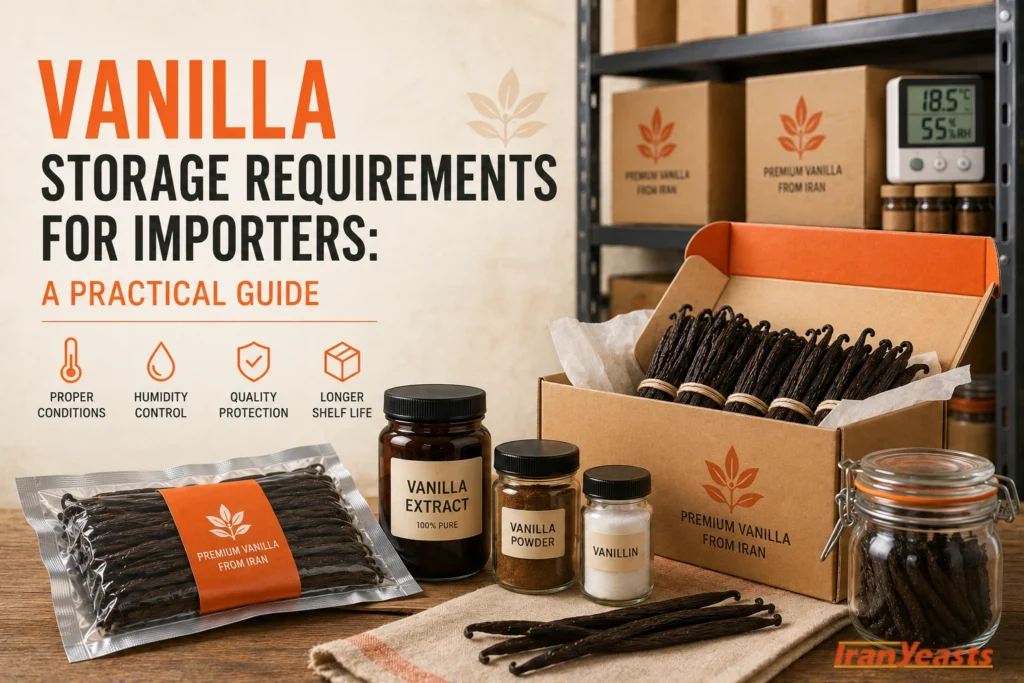
Vanilla is one of the most sensitive commodities in the flavor trade. A shipment that leaves origin in perfect condition can arrive at a warehouse weeks later with mold, clumping, or flavor loss if temperature and humidity were not controlled along the way.
For importers and distributors, storage is not a side detail. It is the difference between a product that reaches food manufacturers at full strength and one that gets rejected at quality control.
This guide covers what bulk buyers and regional distributors need to know about storing vanilla beans and vanillin powder, from the moment a container leaves the exporter’s facility to the day the product reaches a production line.
Looking to Import Iranian Instant Dry Yeast at Wholesale Scale?
Get expert guidance on product selection, packaging, export documentation, pricing, and international shipping directly from our export team.
Vanilla Storage Requirements Every Importer Should Know
Vanilla, in any form, responds to four environmental factors: temperature, humidity, light, and air exposure. This lines up with the FAO’s post-harvest guidance on vanilla, which treats storage conditions as a direct driver of final quality. Get these four right and a shipment holds its aroma and flavor strength for the full length of its shelf life. Get them wrong and the product degrades long before it reaches a buyer’s line, regardless of how good the original quality was at the point of export.
- Temperature: Keep vanilla beans and vanillin powder between 15°C and 25°C. Heat accelerates the loss of aromatic compounds and can cause powder to clump; cold storage introduces condensation risk the moment product is moved back to room temperature.
- Humidity: Relative humidity should stay in the 60 to 70 percent range for whole beans, and well below that for vanillin powder, which is hygroscopic and absorbs ambient moisture quickly if containers are not sealed.
- Light: Store product in opaque containers or in a dark warehouse zone. UV exposure breaks down vanillin content over time, dulling both aroma and color.
- Air exposure: Every time a container is opened and left unsealed, the product loses volatile compounds and takes on ambient moisture. Airtight drums, lined bags, or vacuum-sealed packaging limit this exposure between uses.
Natural Vanilla Beans vs. Vanillin Powder: Different Storage Needs
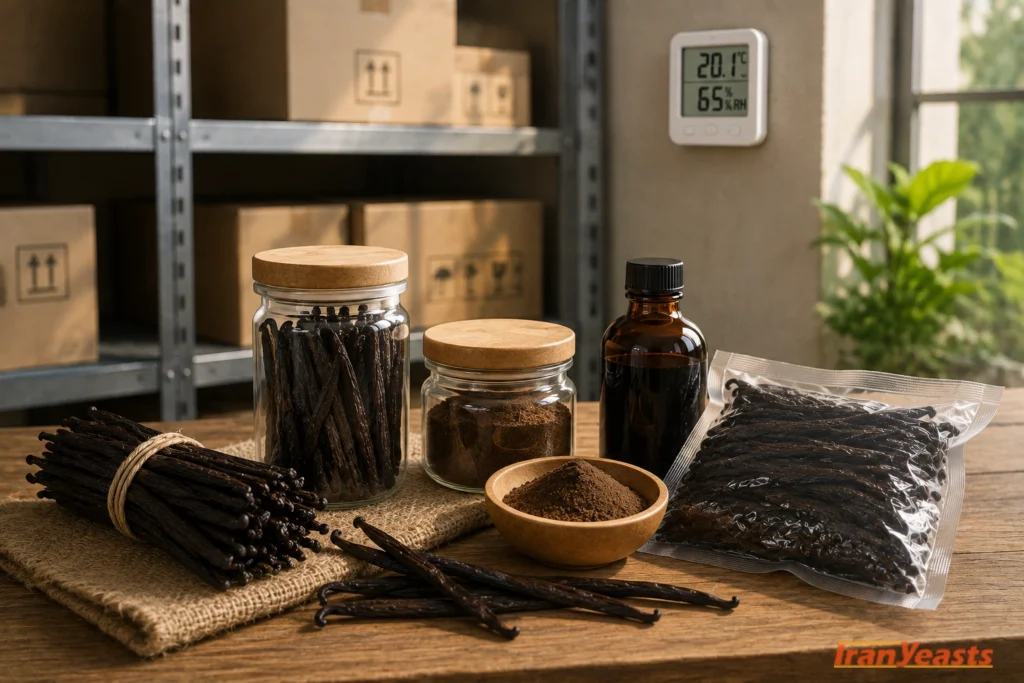
Not all vanilla products behave the same way in storage, and treating them identically is a common mistake among first-time importers. Whole beans and vanillin powder come from different processing paths and carry different moisture profiles, so their storage protocols diverge in a few important ways.
Whole and Cut Vanilla Beans
Cured vanilla beans retain a natural moisture content, which is part of what gives them their pliable texture and rich aroma. This moisture also makes them vulnerable to mold if humidity climbs too high, or brittle and less aromatic if the air around them is too dry.
Reputable exporters grade and pack beans against recognized benchmarks such as ISO 5565, which gives importers a consistent reference point for moisture and quality regardless of origin. Beans should be kept in their original vacuum-sealed or heavy-duty packaging until use, then transferred to airtight glass or food-grade containers, never plastic that allows slow air exchange over months of storage.
Vanillin and Vanilla Flavoring Powder
Vanillin powder carries a longer shelf life under proper conditions, typically 24 months from the date of production, but it is more sensitive to moisture pickup because of its crystalline structure. Powder should stay in its original sealed drum or moisture-resistant lined bag, stored in a cool, dry, well-ventilated space away from oxidizing agents and alkaline environments that can affect its stability.
For food manufacturers sourcing at scale, this is also where certification matters: halal certified Iranian vanilla products typically follow tighter documented handling standards from production through packaging.
Container Shipping and Port Warehouse Considerations
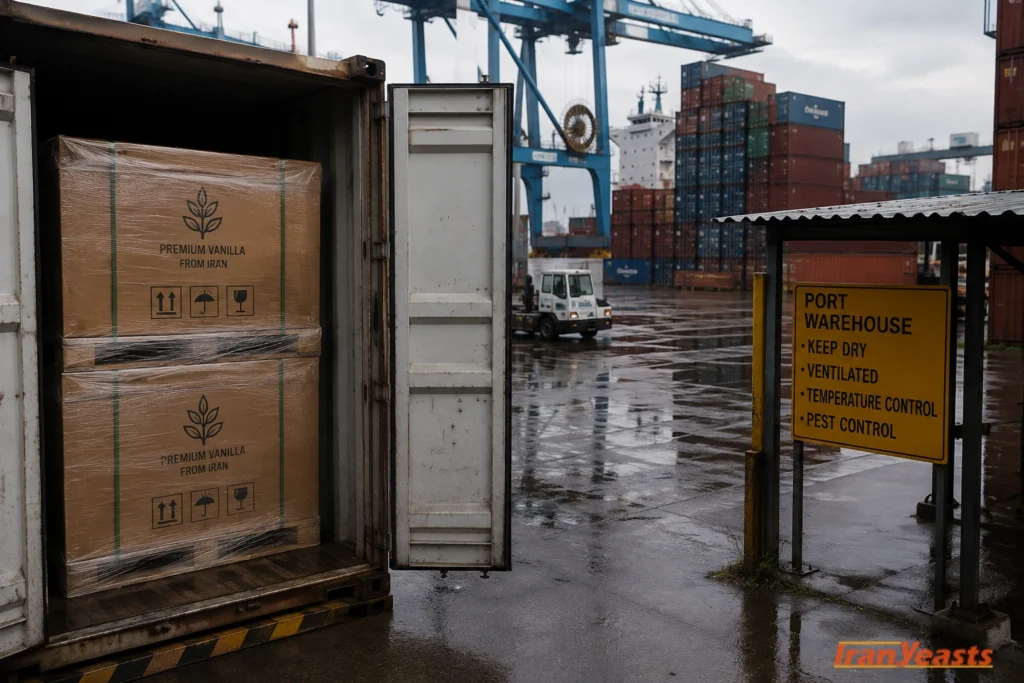
Most quality loss happens during transit and port dwell time, not in a controlled warehouse. A container that leaves the origin facility in good condition can sit on a dock or at sea for weeks, passing through climate zones the product was never packaged to withstand, so this stage deserves as much attention as final storage. Understanding how Iranian vanilla is processed for export makes it easier to see where in that journey packaging choices actually matter most.
Moisture Buildup in Transit
A loaded container carries a significant volume of air around the cargo, and that air holds water vapor that condenses onto packaging as temperatures drop overnight or shift between climate zones. This is often called container rain, and it is one of the leading causes of mold and clumping in powdered food ingredients that arrive at port looking fine on the outside of the packaging but compromised underneath.
Desiccants and Packaging
Placing calcium chloride or clay-based desiccant units inside containers, sized to the cargo volume and route length, keeps relative humidity below the threshold where mold and clumping start. For hygroscopic powders like vanillin, importers should lean toward the higher end of recommended desiccant capacity rather than the minimum, particularly on routes through humid or tropical ports.
Customs and Bonded Warehouse Storage
Once cargo clears customs, it often sits in a bonded or transit warehouse before final delivery. Confirm with the freight forwarder or customs broker that this facility offers climate control, not just secure storage. A few weeks in an uncooled warehouse in a hot climate can undo the protection built into the container packaging.
Shelf Life and Quality Checks for Bulk Vanilla Imports
Shelf life figures on a specification sheet assume the product was stored correctly the entire time, which is not always the case by the time a shipment reaches a distributor’s own warehouse. This is especially relevant for the benefits of buying bulk premium vanilla, where larger volumes sitting in storage longer make consistent conditions even more important. Building a simple quality check into receiving procedures catches problems before they reach a client’s production line.
On arrival, check that packaging is intact and free of moisture damage, confirm the product still carries its characteristic aroma without any sour or musty notes, and, for powder, check for clumping or discoloration that signals moisture exposure during transit. Reputable suppliers provide a certificate of analysis with each batch, and this should be cross-checked against the physical condition of the goods on arrival, not treated as a substitute for a visual and aroma inspection.
Working With a Supplier That Understands the Full Chain
Storage requirements only matter if the product was handled correctly before it ever reached an importer’s warehouse. IranYeasts produces and exports vanillin and vanilla flavoring products packaged specifically for the humidity and temperature swings of regional export routes, with moisture-resistant lined packaging and batch documentation provided with every order, an approach built around what Iranian vanilla for food manufacturers actually needs at production scale.
Conclusion
Vanilla storage is a chain, not a single step. Temperature, humidity, light, and air exposure all need to stay within range from the moment product leaves the production facility until it reaches a food manufacturer’s line, and every weak link in that chain, whether it is a container without desiccants or a bonded warehouse without climate control, puts the shipment at risk. It is one more reason why importers choose Iranian vanilla from suppliers who treat the full export chain as part of the product itself.
Getting this right protects margin as much as it protects flavor. Reworking a spoiled shipment, or explaining a failed QC test to a client, costs far more than the desiccants and packaging that prevent it in the first place.
References
- Food and Agriculture Organization of the United Nations. (n.d.). Vanilla: Post-harvest operations [PDF]. FAO Post-Harvest Compendium.
- International Organization for Standardization. (1999). Vanilla [Vanilla fragrans (Salisbury) Ames] - Part 1: Specification (ISO 5565-1:1999).
- Multisorb Technologies. (2025, July 30). How desiccants for food shipping protect your food's quality.
- Amadeus Vanilla Beans. (2025, October 15). How to store vanilla beans after opening (freeze or not?).
- Gillco Ingredients. (2024, March 12). Vanillin & ethyl-vanillin.
Frequently Asked Questions
Find answers to common questions about Iranian instant dry yeast, including certifications, bulk orders, private labeling, export logistics, and delivery worldwide
What is the ideal storage temperature for vanilla beans and vanillin powder?
Both should be stored between 15°C and 25°C. Avoid refrigeration, which introduces condensation risk and can degrade aroma compounds when the product returns to room temperature.
How long can vanillin powder be stored before it loses quality?
Properly stored vanillin powder typically holds its quality for 24 months from the production date, provided it stays in sealed, moisture-resistant packaging in a cool, dry space.
Can vanilla beans be frozen for long-term storage?
Freezing is not recommended for whole vanilla beans. It can dry out the pods unevenly and encourage condensation-driven mold when they are brought back to room temperature.
What causes clumping in imported vanillin powder?
Clumping is almost always caused by moisture pickup, either from humid storage conditions or from condensation forming inside shipping containers during transit through varying climate zones.
Do importers need desiccants inside shipping containers?
Yes, for any shipment of powdered vanilla or vanillin products, especially on routes through humid ports. Desiccants keep relative humidity below the level where mold and clumping begin.
How should distributors check incoming vanilla shipments for quality?
Inspect packaging for moisture damage, confirm aroma is characteristic and free of sour or musty notes, check powder for clumping or discoloration, and compare the batch against its certificate of analysis.
Does bonded warehouse storage affect vanilla quality after customs clearance?
Yes. An uncooled bonded warehouse in a hot climate can undo the protection built into export packaging, so importers should confirm climate control is available at any transit facility.